The ultimate guide to your credit score

9 minute read

Person browsing clothing on hangers inside a retail store, examining sweaters while standing among clothing racks.

One of the foundations of financial wellness is having a healthy credit score. A significant part of achieving this is understanding your credit score, what it means, how it’s calculated and learning practical strategies to improve it.

There are simple steps you can take to improve their credit score. But before we explore some of those strategies, we’re going to look at what makes a good score, how it’s calculated, where you can check yours, and why it all matters.

What is a good credit score in Canada?

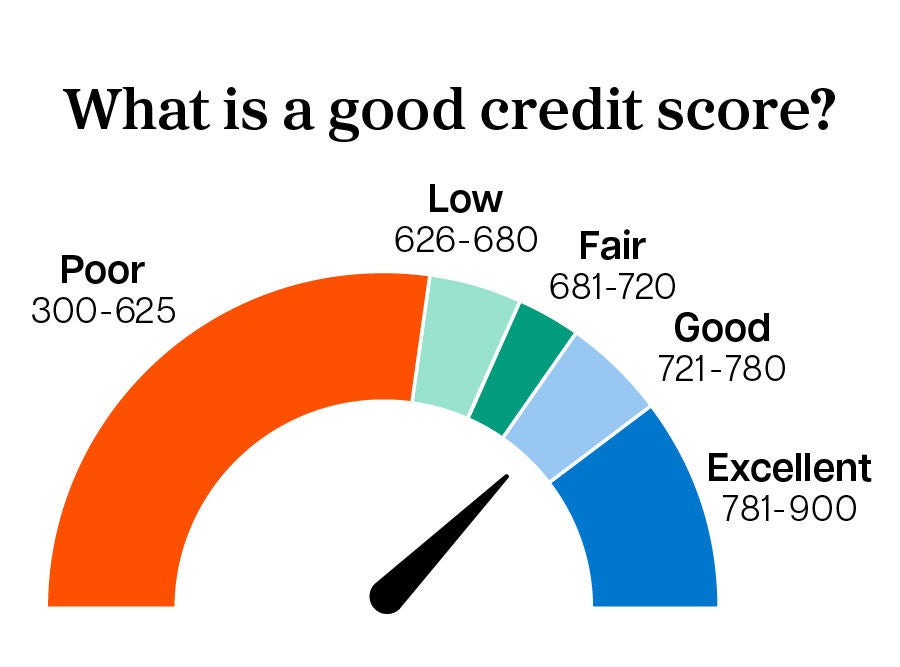
In Canada, credit scores range from 300 to 900, 900 being a perfect score and 300 the lowest.

According to data from a 2022 survey, the average credit score in Canada is 672, and 694 in British Columbia.

Your credit score is used by lenders to determine what kind of borrower you are. It can affect your eligibility for certain loans or credit cards, as well as the interest rate you get.

infographic explaining the credit score ranges in Canada, from poor to excellent

You may know some of the fundamentals already, such as debt utilization ratio and the difference between hard checks and soft checks or between revolving credit and installment credit. But these are just a small part of the story when it comes to seeing the full picture of your overall credit.

What does a low credit score mean?

A low credit score doesn’t automatically mean you’ll never be able to borrow. Some places might still lend you money, but it could be at a higher interest rate.

This is one of the ways you’ll find your credit score really matters: the better your score, the less you pay through interest. In other words, a good credit score helps you save money.

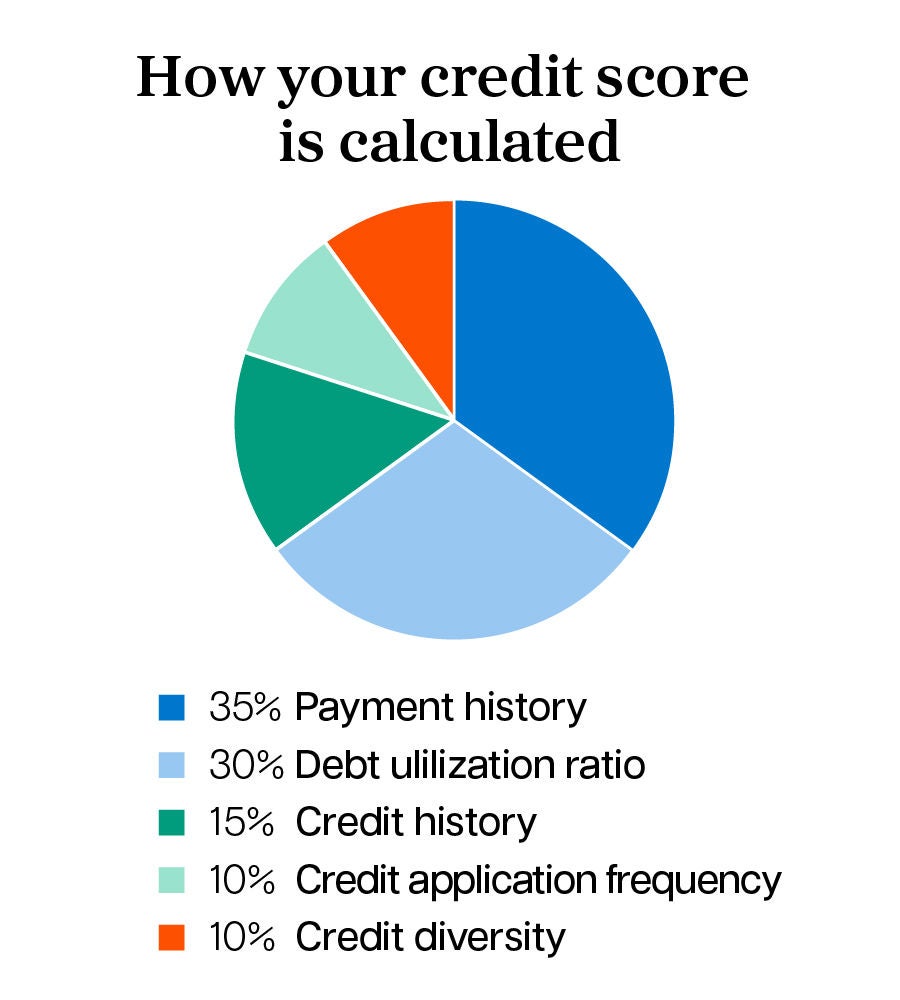
Your credit score is calculated using these five factors. Most of the information is automatically removed after 6 to 7 years, although not purged.

So good news: That phone bill or student loan payment you missed a while back won’t be haunting your score today!

infographic explaining what goes into calculating your credit score in Canada

1. What’s your payment history?

Payment history is the most important factor affecting your credit score. Prospective creditors want to know that you are going to pay them back. Your payment history covers all consumer debt, including credit cards, lines of credit, student loans, car loans, and cell phone payments on contract.

Creditors want to know:

  • Do you pay your bills on time?
  • How frequently do you miss a payment?
  • How many times have you missed a payment?
  • How old are your missed payments?

2. How much do you currently owe?

When creditors look at how much you owe, they’re trying to determine if you can take on more debt, and if you can manage with more.

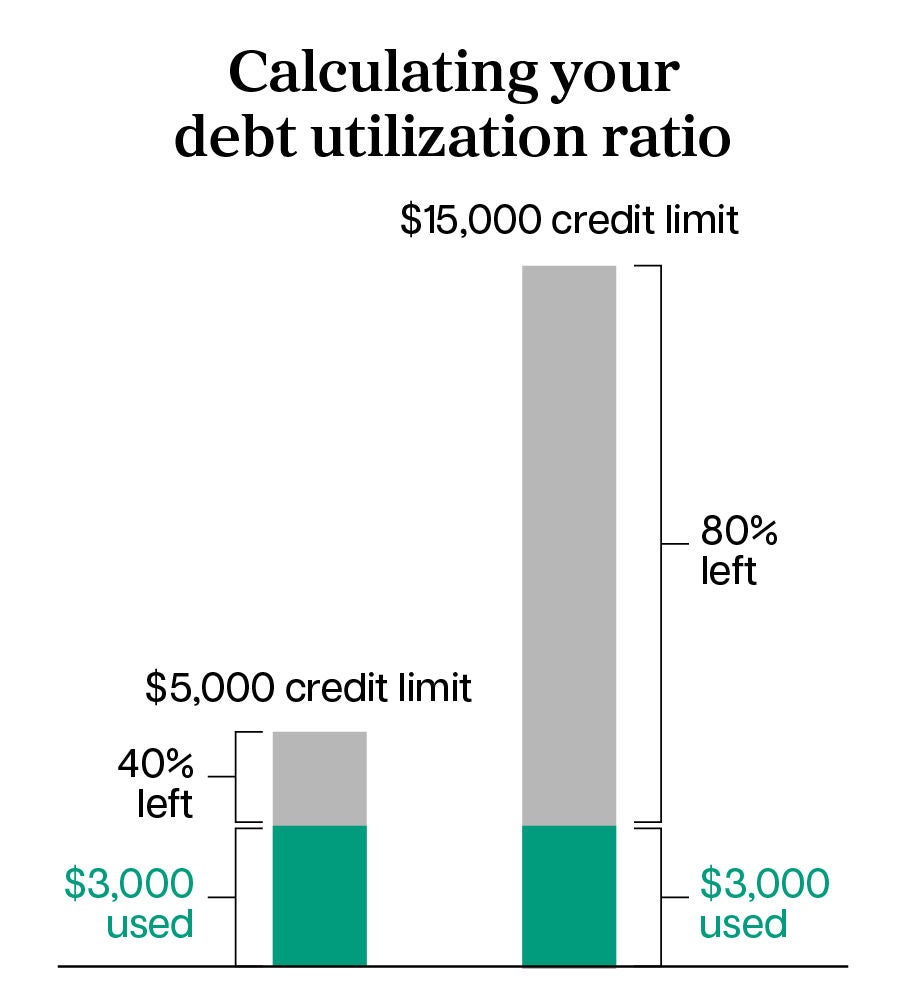
Besides looking at the amount of debt that you currently have, lenders will look at what’s called debt utilization ratio: that’s the amount of credit you’re using compared to the amount that’s available to you.

For example, if you have a credit card limit of $5,000 and you’re constantly hovering at $3,000, then you’re using 60% your available credit on an ongoing basis. To a creditor, that indicates that you’re struggling to pay off your existing debt. Meanwhile, if you have a $15,000 credit limit, $3,000 used only makes up 20% of your credit.

Creditors will also look at how much outstanding debt you have compared to how much was available to you.

Creditors want to know:

  • How much in total do you currently owe?
  • How much are your payments?
  • How much of your available credit do you use on an ongoing basis?

infographic explaining how debt utilization ratio is calculated in Canada

3. How long is your credit history?

Creditors want to see a long-established history of managing credit. There’s nothing more frightening to them than somebody walking out of the woods with a clean slate. A good credit history is built over time and that’s something you can’t lifehack.

Creditors want to know:

  • How long has it been since you first obtained credit?
  • How long you’ve had each account for?
  • Are you actively using credit now?

4. How frequently are you applying for new sources of credit?

Creditors see frequently applying for credit as a red flag that tends to signal financial difficulty rather than stability. If you sign up for new credit cards, loans or other forms of credit often, lenders may conclude that you're not able to manage your money.

There are two kinds of credit checks: hard checks and soft checks.

Soft checks occur when you or a third party are reviewing your credit for non-lending purposes, like a credit monitoring app.

Soft checks don’t affect your credit score.

Hard checks happen when you’re looking for credit. This can include applying for a new loan, a new credit card, a mortgage, and so forth.

Hard checks hurt your credit rating.

Creditors want to know:

  • How many times did you request a hard credit check in the last 5 years?
  • How many credit accounts have you opened recently?
  • How much time has passed since you last opened a new account?
  • How long ago was your most recent inquiry?

5. What kind of credit have you used?

There are two kinds of credit: revolving credit and installment credit.

Installment credit is a loan that you pay back on a regular schedule. The amount of the loan is set when you are approved, and the balance is gradually reduced through installment payments.

Mortgages and student loans are examples of installment credit.

Revolving credit is not a predetermined amount. You will have a credit limit that sets how much you can borrow up to, but you can pay it off and spend it again indefinitely.

Credit cards and lines of credit are examples of revolving credit.

Having high levels of revolving credit is not the same as having equal levels of installment credit. The latter is considered more secure.

Creditors want to know:

  • Do you have high levels of revolving credit?
  • Do you use deferred interest or payment plans to pay for large purchases?
  • Do you resort to loan consolidation services?
  • Do you access payday loans or other unsecured loans?

How do you check your credit score in Canada?

Now you know what a credit score is and how it’s calculated, but how do you actually check it?

In Canada, your credit score is calculated by two different credit bureaus: Equifax and TransUnion. You can request a free copy of your credit report by mail at any time, though your credit score is not included on the reports. Both bureaus can provide your credit score for a fee and offer credit monitoring services.

If you prefer an instant look at your credit score, there are several apps that share that information with you monthly, including Borrowell, Credit Karma, and CreditVerify.

How do you improve your credit score?

When you understand how your credit score is calculated, it’s easier to see how you can improve it. That’s the good news: no matter how low your score is, there are a few relatively easy ways that you can change your habits and improve it.

1. Make regular payments

One of the easiest ways to improve your credit score or to build it from the ground up is to make consistent, regular payments on time over time. These are things that potential lenders love to see, like consistency, dependability, regularity, and history.

When it comes to credit cards, the best financial advice is always to pay it off once or twice per month so you’re never running a balance. Making regular payments is one of the best habits to get into because you’re always paying down your debt.

2. Close your newer accounts

Remember when we discussed how your payment history is the biggest part of your credit score calculation? If you have several credit cards and you’re thinking about closing one (or several) of them to help you manage your debt a little better, it’s more advantageous for your credit score to close the most recent one. That way, you can maintain the history with an older account.

You may have some good reasons to close your older accounts, such as a higher interest rate, annual fee, and so forth. If that’s the case, consider your timing. Your purchase of a new car in a couple months, new cell phone contract or application for a line of credit will go smoother if your credit looks as good as possible.

Be aware: Canceling a credit card will always have an immediate negative impact on your credit score, because you are reducing the amount of available credit and usually increasing your debt utilization ratio. It’s easier to pay off the card and set it aside to not use anymore instead of closing it altogether.

3. Accept an increase on your credit limit

Improving your debt utilization ratio is one of the fastest ways to build up your credit; you could even see your score go up 30 to 50 points in a month! The ideal debt utilization ratio is 30%, but it’s best to keep it below 10%.

The best way to do that is, of course, to pay down the balance, but you can also accept offers to increase your credit limit. Be careful, though: If you call in to ask for your credit limit to be increased, you’ll initiate a hard check, and that will hit your credit score.

But when your credit card company sends an offer to increase your limit, and the time is right, look into it. Just be mindful that you're not going into more debt to improve your credit score.

4. Use different kinds of credit when possible

Which do you think a lender would rather see on your credit report: a credit card, or a student loan? A line of credit, or an RRSP loan?

Creditors see revolving credit as less secure than installment credit. If improving your credit score is your goal, then you want to diversify your sources.

It doesn’t have to be a lot. A small loan that you pay off within 12 months will go a long way. Just think outside of the credit card box, or consider a secured credit card.

Pro-Tip: If you are just starting out with no credit, an RRSP loan is one of the best tools you can use. It helps you build a great credit history through installment credit, while boosting your RRSP savings and giving you the tax benefits that come along with it.

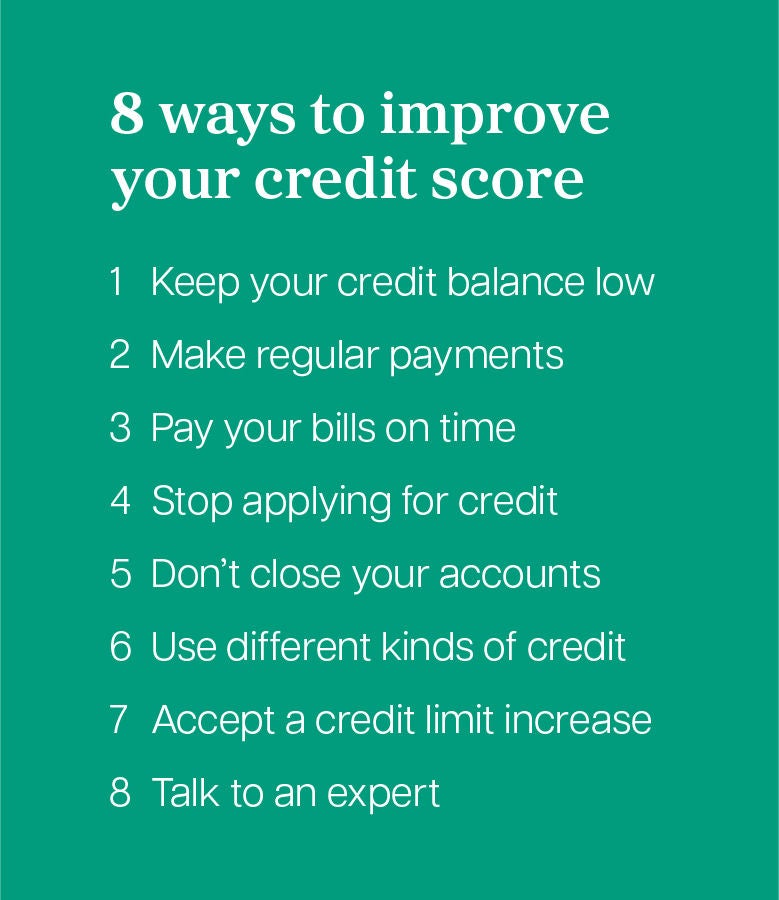
inforgraphic giving 8 specific ways to improve your credit score in Canada

The most important rule of managing credit is: don't bite off more than your can chew.

When you understand your credit score, how it’s calculated and how you can improve it, you start to think a little more deeply about the debt you might be considering.

Working to improve your credit score helps you develop strong financial habits. It's building a foundation that will help you as you continue your journey towards financial wellbeing.

We want to help you make the best decision for you and your family to make a plan to become debt-free. We’re happy to answer your questions about building your credit score up.